
On-Page SEO vs Off-Page SEO: The Full Guide for 2026
Small business owners in the USA, Canada and Australia are often left with the challenges of search engine optimization (SEO) in the fast-paced world of digital marketing. A lot of people will be thinking, “How can I make my business stand out from the crowd online?” The answer is often a good understanding and strategic use of on-page and off-page SEO techniques. This complete guide is designed to demystify these important elements so you can find your path to better search engine rankings and long-term online visibility.
What is SEO On-Page and Off-Page in 2026?
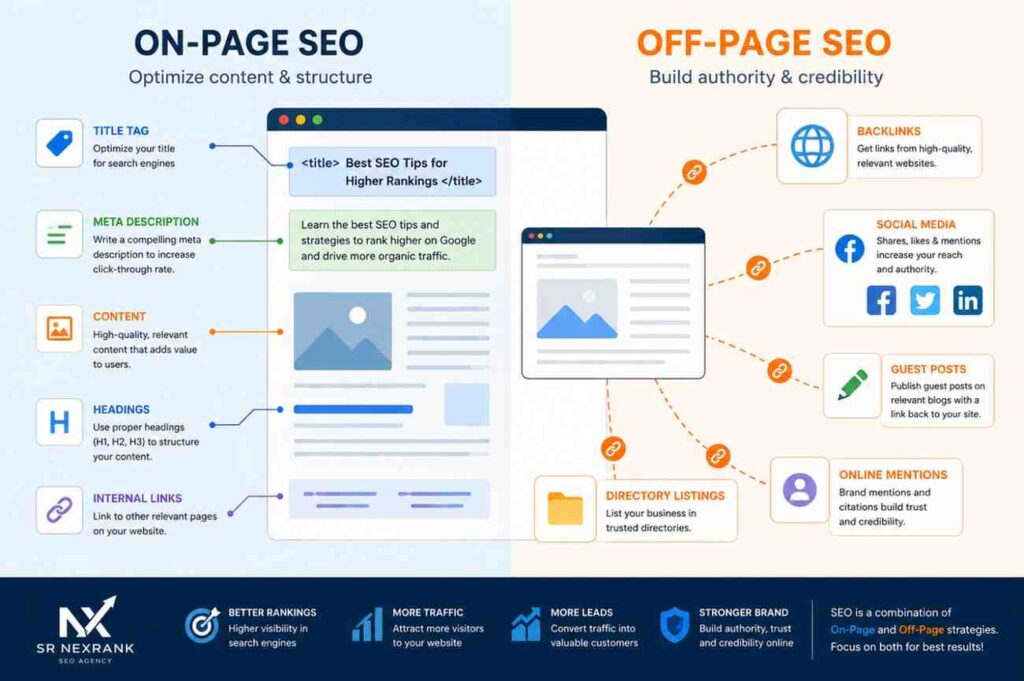
Every business that is looking for a top placement in search engine results should know the basic differences and the relationship of on-page and off-page SEO. Both of these types of SEO are different but complementary and contribute a lot to your overall digital success and how search engines interpret your website’s relevance and authority.
What is On Page SEO – ?
On-page SEO is the act of optimising your own website to help search engines understand your website content and relevance better. That means improving things like content, keywords, title tags, meta descriptions and images to help increase your search engine rankings and improve your visitors overall experience.
What is Off-Page SEO?
Off-page SEO is all the activities you do outside of your own website to improve your search rankings in the search engine results pages (SERPs). This process is designed to get quality backlinks and promote via social media and local citations, all of which are essential to a successful online presence and increase your site’s authority and credibility in the eyes of search engines.
Why Both Types of SEO Matter
You need to have on-page optimization and off-page SEO in order to get sustainable search engine rankings. On-page SEO ensures your website is technically optimised and relevant for specific search queries. Off-page SEO is the authority and trust you need to be relevant to your website. This symbiotic relation means that search engines will understand and like your content better and will bring you more organic traffic in return.
On Page vs Off Page SEO: “What’s the difference?”
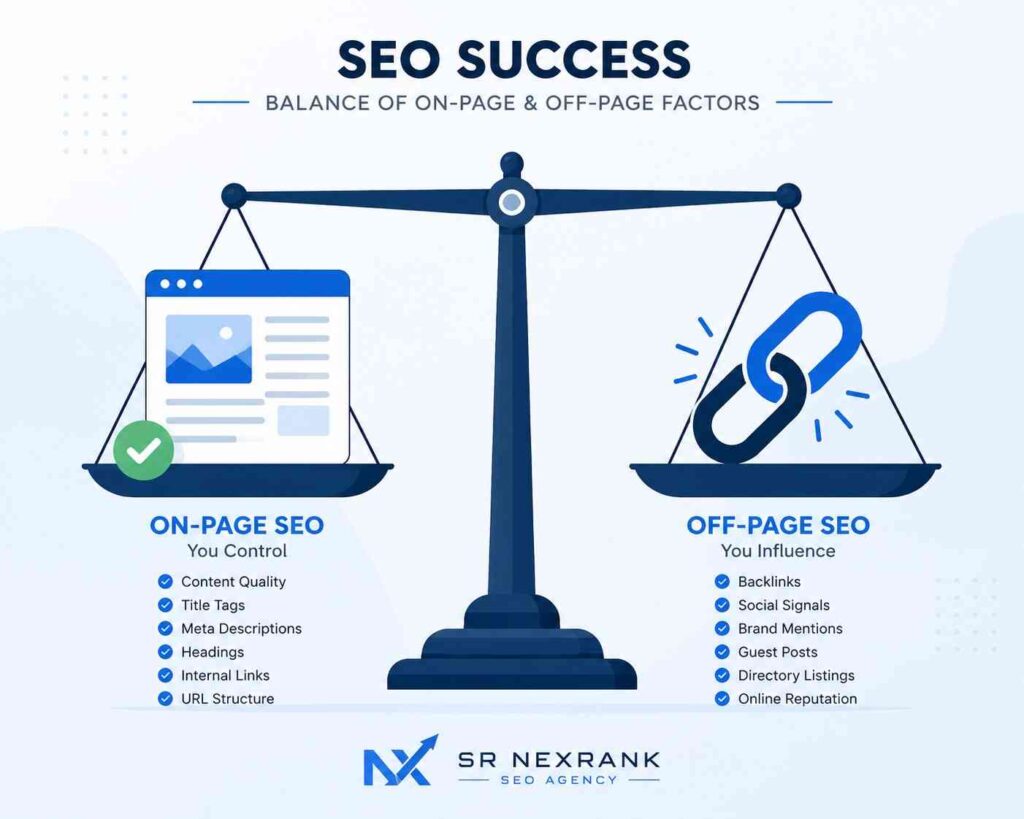
There are two types of search engine optimisation, the on-page and off-page. Both are crucial to an effective search engine optimisation strategy, but it’s important to understand the differences and what each does. Knowing the main difference between on-page and off-page search engine optimization helps you build a better and targeted approach to increase visibility and search engine rankings of your website.
Page Vs Off Page SEO Elements
The main difference between on-page and off-page SEO factors is where they are and how much control you have over them. On page factors are content and technical factors that you can control and change on your own site. Off page SEO factors are signals and actions by third parties outside of your website that add to your site’s credibility and authority (i.e. backlinks).
What Are On Page SEO Factors?
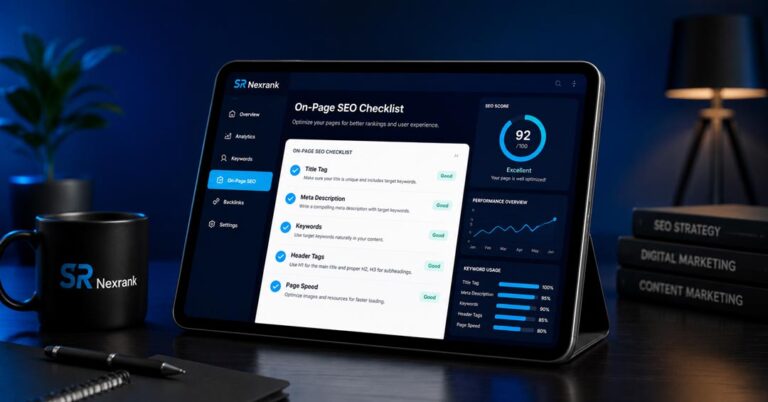
On-page SEO stuff includes page titles, content quality, internal linking, etc. On-page SEO must consist of: Keywords focused on high quality content page. Great title tags and meta descriptions. Good titles. Figures 1. Descriptions. Fast loading. These on-page elements are key ranking factors for the success of your website because they help search engines to understand your content and also make the user experience better.
Off-Page SEO Factors—What Are They?
Good off-page SEO is about using off-site signals to build your website’s authority and trustworthiness. Quality backlinks from authoritative sites, brand mentions on the web, social media activity and local SEO citations are some of the important off-page SEO factors. These things tell search engines that your site is an authority and good resource. This will help you improve your SEO and get higher rankings in SEO.
On-Page SEO Techniques 2026
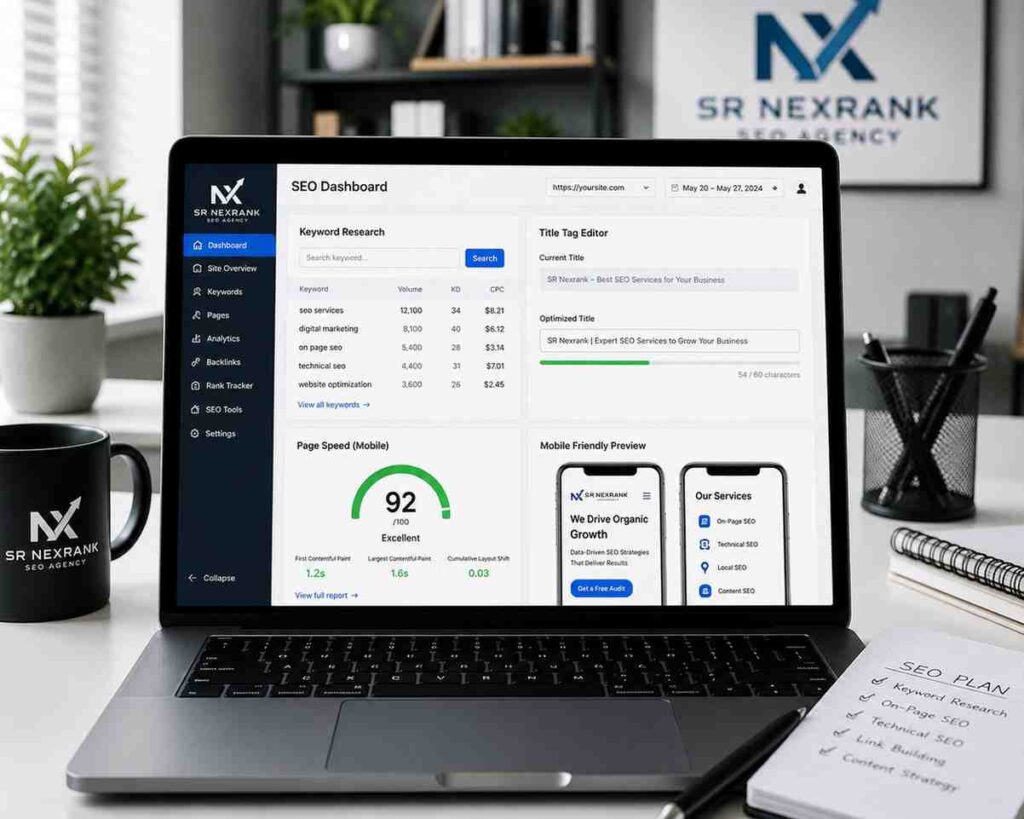
Search engines are constantly changing, and so are the best practices of on-page SEO that influence the search engine results pages. It is so important to stay up to date with the latest techniques when it comes to improving your website’s visibility in search results and boosting your SEO and maintaining it. It’s still about great user experience, quality content, and technical excellence that lead to strong search engine rankings in 2026.
On-Page SEO Basics
Major on-page SEO strategies for 2026 include: 2026 page SEO strategies will involve deep keyword research, producing comprehensive and compelling on-page content that satisfies user intent, optimizing title tags and meta descriptions for improved click-through rates, and putting in place efficient internal linking. These on-page factors are pretty important for search engines to understand your content and serve the relevant search results to users.
Local SEO Tactics You Must Implement
If you are running a business targeting local customers, then effective local SEO techniques are a must. On-page SEO is about optimising your Google My Business listing with correct information, getting local citations, asking for customer reviews and ensuring the content on your website is optimised for local search queries. These tactics are essential for getting your business listed in local search results and bringing in local customers.
Elements of Technical SEO
Technical SEO factors are the nuts and bolts of making sure your website is crawlable and indexable to search engines. That means you need to work on your page speed and core web vitals, structured data markup, and make your site mobile-friendly and secure using an HTTPS connection. By focusing on these technical on-page factors, you will help improve your site’s overall performance, and it will have a direct impact on your search engine rankings, resulting in a better page experience for users and good SEO practices.
Off-Page SEO Techniques for 2026
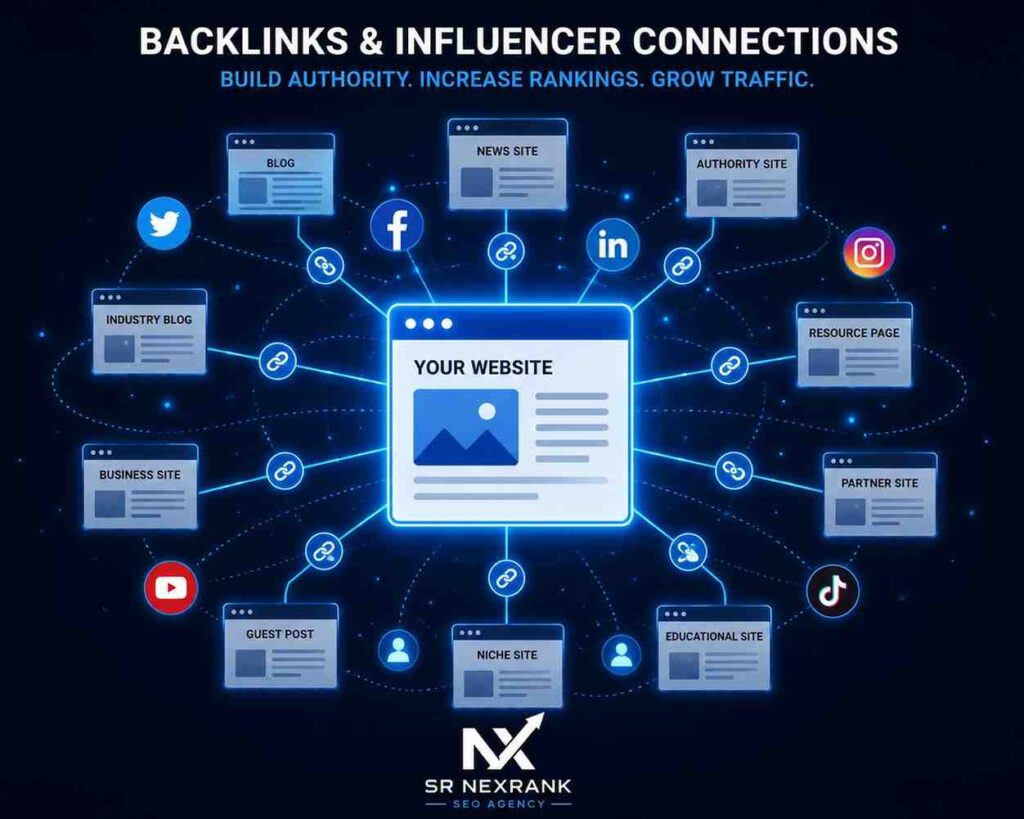
Off-page SEO in 2026 is still about creating authority and trust signals that search engines can recognize. On-page SEO is about all the things you can control. Off-page SEO is about getting endorsements and mentions from outside sources to make a big jump in your search engine rankings. A robust off-page strategy is essential for a broader SEO strategy that will lead to ongoing success in SEO and help search engines view your site as a valuable resource.
Building High-Quality Backlinks
Even if you’re doing SEO off of your own website, you still need good backlinks. In 2026, relevant quality sites will provide links, and the anchor text will be natural and descriptive. These quality backlinks are strong recommendations that improve your SEO by demonstrating to search engines that your content is credible and valuable. If you want to improve your domain authority and overall search engine results, it’s more important than ever to build links the right way. Focus on a natural link profile, not a quantity of links.
Social Media Hacks That Really Work
Off-page SEO is also getting more important in social media engagement strategies, not just for direct traffic but also for brand awareness and indirect ranking signals. But if you are active on the relevant platforms for your target audience and you share valuable content you can get brand mentions, shares and even natural backlinks. Social signals are not a direct ranking factor but they do play a huge role in your overall online presence, user experience and ultimately help search engines understand your brand prominence.
The Impact of Influencer Marketing
Influencer marketing is not only a powerful way to build links, but to create brand mentions and referral traffic, making it another big tool in building off-page SEO. The right influencers can also help you reach a bigger, more engaged audience, resulting in more brand awareness, social shares, and even quality backlinks—all important elements of good off-page SEO. The upside of influencer marketing for 2026 is that you can create genuine endorsements that boost your website’s authority and trust, both of which are critical to ranking well in competitive search engine rankings.
On-Page vs Off-Page SEO: What Matters More?
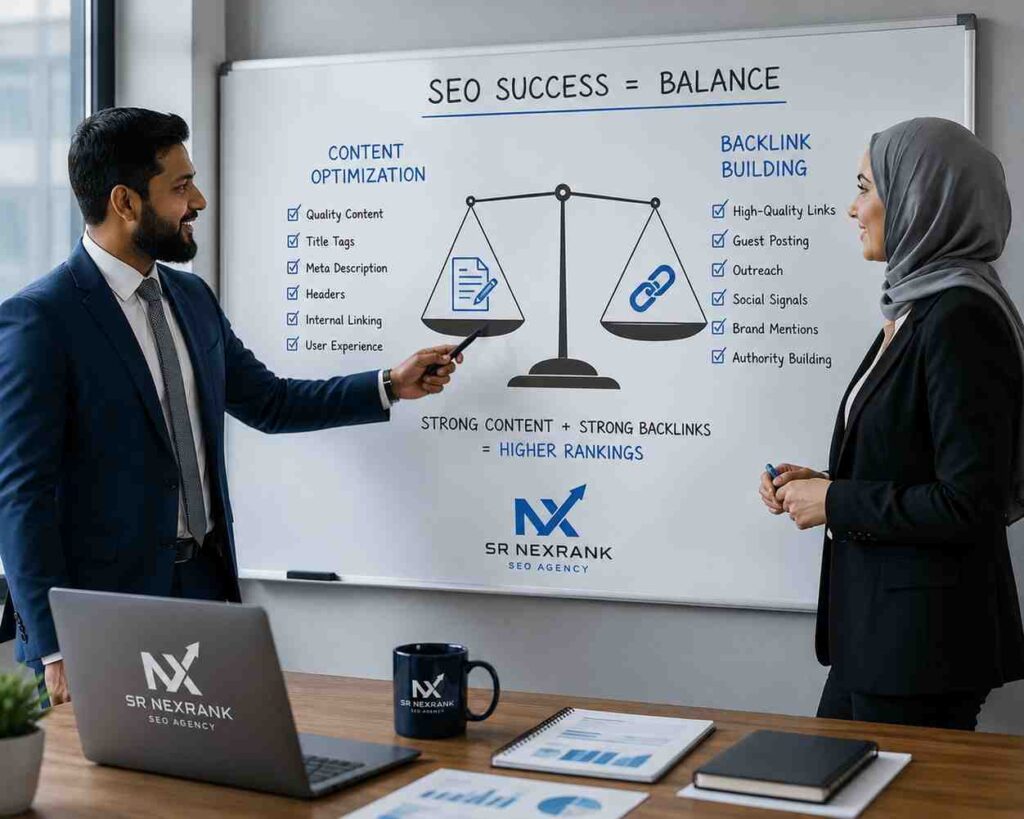
On-Page SEO vs Off-Page SEO : Which one is more important ? It’s a question I get asked all the time, but the truth is both are key ingredients for a truly effective SEO strategy. Neither can get top search engine positions on its own. When you learn the difference between on-page and off-page SEO, you’ll get better search engine results and success in SEO overall. The trick to an integrated approach is understanding their complementary roles and how they affect one another.
Effect on ranking analysis
When we talk about the effect on ranking, it is quite clear that the on-page SEO and off-page SEO factors have a significant effect on search engine result pages but in different ways. On-page factors make sure the content on a page is relevant and user-friendly, creating the stage for search engines to understand what your site is about. External validation is the off-page signals, especially quality backlinks, which help to build trust and authority and allow your site to rank higher in competitive search queries. If you are not good at either of the two, you will not be able to rank high in Google searches.
When to concentrate on On-Page and Off-Page
When to focus on-page vs off-page efforts will often depend on where your website is at, and your particular SEO goals. If your website has some basic optimizations like relevant keywords in your page content, optimized title tags or good page speed, then it is important to focus on on-page SEO first to build a solid foundation. Once you have all your on-page elements nailed down, it’s time to start looking into off-page SEO strategies such as link building to increase your domain authority and get you to the top of the search engine results pages for a well-rounded SEO plan.
Using Both to Best Advantage
For long-term SEO success, a combination of on-page and off-page SEO will give you the best results. Your on-page SEO ensures your website is technically sound, user-friendly, and relevant to the search queries. Your off-page SEO builds the essential authority and trust with backlinks and other external signals. The combination of on-page and off-page SEO creates a synergistic effect. That synergy helps search engines better understand and appreciate your content. This will improve your content ranking in the search engine results and give a better experience to your audience on the page.
SEO errors you should not make

SEO can be tricky to navigate. Common mistakes can hurt your site’s SEO. Just as important as steering clear of these pitfalls is the application of best practices to ensure your SEO efforts hit the mark with the search engines. Such error fixing can save you time and resources and get your website higher search engine rankings and, undoubtedly, longer online presence.
Avoid on-page elements.
If you ignore the on-page factors, you will make a big mistake, and you will lose your website visibility dramatically. Many businesses, especially beginners, are very serious about the off-page things like backlinks, but they forget the important on-page factors like keyword optimization in their page contents, compelling title tags, and meta descriptions. Strong off-page signals can be hindered by a poor internal linking structure or slow page speed, which can also play a huge role in user experience and how search engines view your site, making it hard for your content to rank higher.
Not Doing Off-Page Work”
Another common mistake is to neglect off-page efforts that can unlock the full SEO potential a website has. Good on-page SEO is a good place to build on. However, if you don’t combine it with consistent off-page SEO tactics, especially quality link-building, your site won’t be able to build the domain authority and trust in the eyes of search engines. The point is, even if your on-page content is perfectly optimized, you still might not be able to rank higher in competitive search results without these external votes of confidence.
Steering Clear of Optimization With SEO Tools
Failing to use SEO tools for optimization is a big mistake that can cause the failure of your on-page and off-page SEO efforts. If you don’t conduct proper keyword research, competitive analysis, or backlink auditing, you may be missing opportunities and wasting your efforts on things that will hurt your site’s SEO performance. These indispensable tools for on-page and off-page analysis give you invaluable data regarding search queries, ranking factors, technical SEO issues, and link building opportunities that ensure your full-fledged SEO strategy is data-driven and focuses on areas needing improvement so that search engines better understand your website.
On-page & Off-page SEO Tools
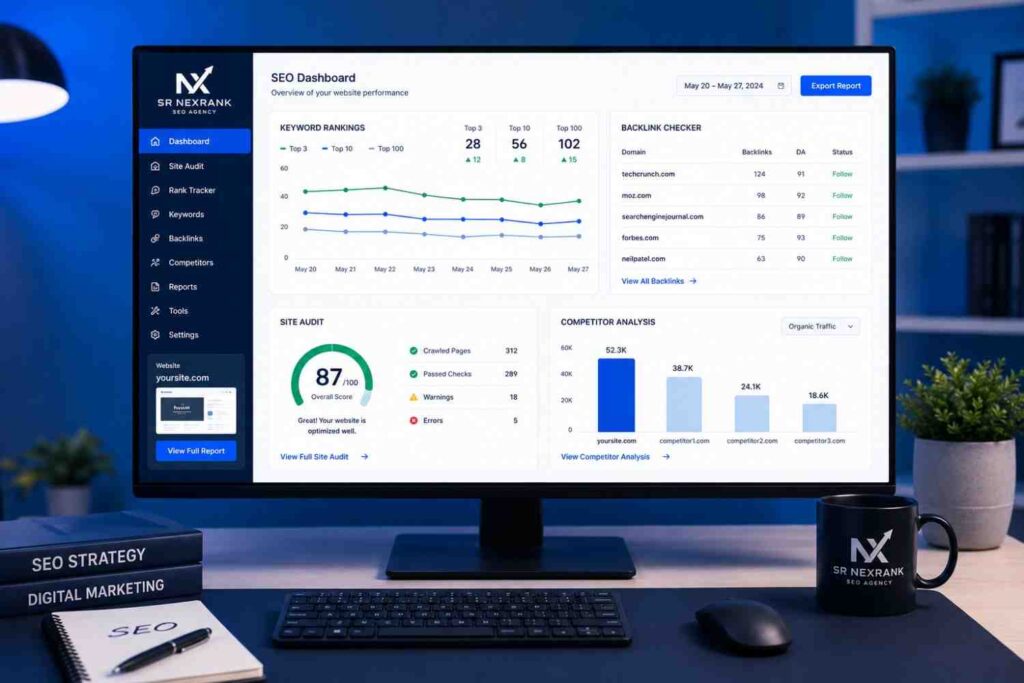
You need the right tools to implement on-page and off-page SEO strategies. These on-page and off-page optimization tools provide valuable insights, automate repetitive tasks and help businesses monitor their position in search engine rankings. Specialized software enhances your SEO endeavors with data-driven, efficient and up-to-date best practices. It improves the way search engines interpret your website’s content on a page and makes a big impact on your overall SEO success.
Best Tools to Improve your On Page SEO
To optimize on-page SEO and fine-tune the inner workings of your website, you need a handful of specialised tools. Tools like Surfer SEO or Clearscope can help you analyse and optimise your page content for relevant keywords, ensuring your content is comprehensive and fulfils the user’s intent. You can also use Screaming Frog or Ahrefs Site Audit to find technical SEO issues including broken internal links, duplicate content, and slow page speed. They are an important on-page factor for user experience and search engine rankings. Invest smartly in these tools, and you would be able to optimise your title tag, meta description and alt text.
Resources for Off-Page SEO Techniques
Backlink analysis and competitor monitoring are important tools for successful off-page SEO strategies. SEMrush, Ahrefs, and Moz are the best platforms for analysing your backlink profile, finding high-quality backlinks, and discovering new link building opportunities. These tools can also help you to keep track of your domain authority, keep an eye on your competitors off-page SEO activities, detect potential spammy links that are harmful for your search engine rankings. These tools will help you to get a competitive advantage in getting valuable external votes of confidence to your website and improve your SEO results.
Tools to Boost Your SEO Strategy
Adding SEO tools into your overall SEO strategy will give you a consistent and powerful way to improve your SEO and search engine ranking. Leverage the tools you used to complete your content audit, technical audit, backlink audit, and competitor research to develop an overarching SEO strategy. This combined approach allows you to work on internal website optimisations and external authority building at the same time, ensuring that your SEO efforts are maximised and your website is at its best in search engine results for all relevant search queries, which is an invaluable SEO help.
Comparison Tables: Off-Page SEO and On-Page SEO
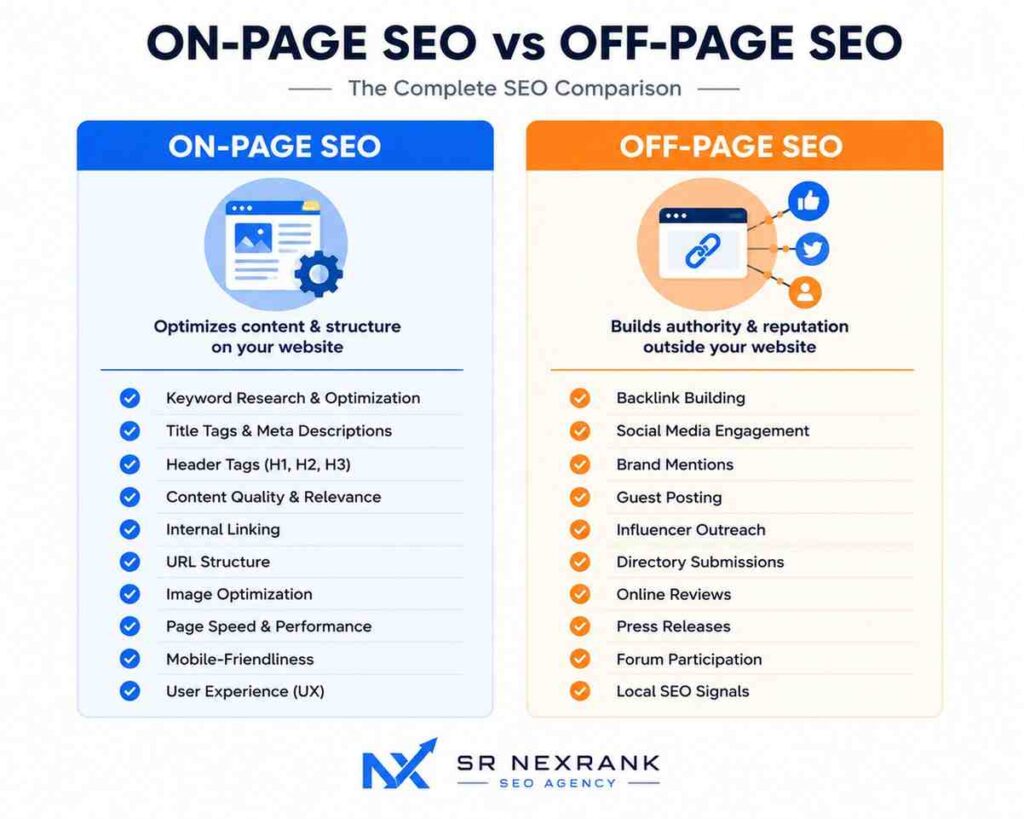
Comparison tables are a great tool to visualise clearly and concisely the different characteristics and common objectives of on-page and off-page SEO, making the difference even more clear. These tables can be a quick reference for small business owners to understand basic difference and contribution of each type of SEO to overall success in search engines. This kind of visual breakdown helps to make resource allocation and planning of a well-balanced overall SEO strategy that covers all important factors for high search engine rankings easier.
Seeing the Distinction
The comparison tables can assist you to clear the key difference between on-page vs off-page SEO. Here, you can see that on-page elements are the foundation of relevance, while off-page efforts build the trust and credibility search engines need to help your site rank higher.
| SEO Type: Understanding the difference between on-page SEO and off-page SEO is essential for effective strategies. | Key Characteristics & Factors |
| On-Page SEO | Mostly within your control and internal. This includes optimising page content, page titles, meta descriptions, page loading speed, and internal linking structures. |
| Off Page SEO External | Domain authority building. Quality backlinks, social signals, and brand mentions. |
Performance characteristics comparison
On-page optimisation vs off-page SEO performance metrics comparison. You can see the different metrics that are used to measure the success of each kind of SEO. Knowing these different metrics can help you judge how effective each type of SEO work is, and tell you what changes you need to make later on to your overall SEO plan.
| SEO Type | Key Performance Metrics |
| On-Page SEO | Keyword rankings, organic traffic to specific pages, bounce rate, time on page |
| Off-Page SEO | Domain authority, number and quality of backlinks, referral traffic, social media engagement |
Cost/Benefit Study
This cost vs benefit analysis can help small business owners decide where to spend their resources for on-page SEO vs off-page SEO. You can then assess the long term ROI of each kind of SEO work, so that you take a balanced approach to the process that will optimise your overall SEO success, all the while managing your budget efficiently.
| SEO Type | Investment in both on-page SEO and off-page SEO refers to crucial strategies for long-term success in Google search rankings, highlighting what’s the difference between the two approaches. | Benefits |
| On-page SEO | Initial investment in content creation, technical audits, and optimizing on-page elements is essential for effective SEO builds credibility and authority. | Improved relevance and user experience can significantly enhance your SEO performance. |
| Off-page SEO | Continuous investment, particularly in link building and good SEO practices, is vital for long-term success, especially since off-page SEO is less emphasized. | Significant increases in domain authority and search engine rankings are a big part of on-page SEO efforts, demonstrating how SEO builds credibility and authority. |
Frequently Asked Questions About SEO
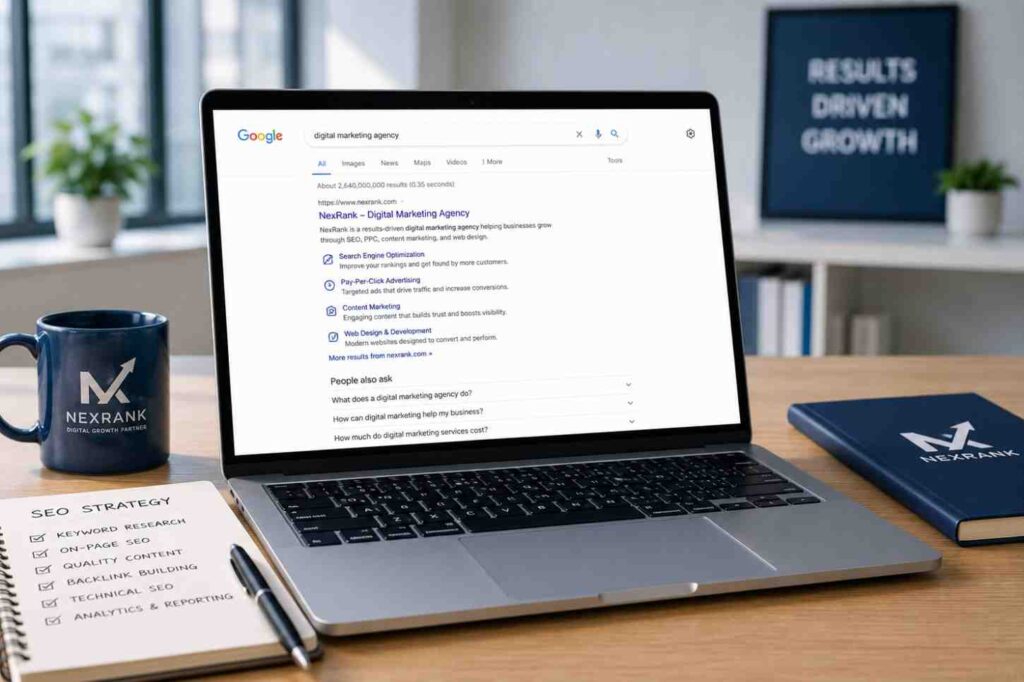
There are loads of questions small business owners have about the nitty gritty of search engine optimisation. In this SEO FAQ, we answer some of the most common questions to help demystify the process, as well as give clear and actionable insight into how on-page SEO is all about optimising your content. In this section we will try and clear up some of the confusion around what on-page and off-page seo means and give some simple explanations so that you can make better decisions about your own seo strategy and rank better in the search engines.
What is the difference between on page and off page SEO ?
The key difference between on-page and off-page SEO relates to where the optimisation is taking place and what it is trying to influence. On page SEO is the process of optimising elements on your website such as your page content, title tags, meta descriptions, and images to help search engines understand what your content is about and to improve it for users. Off-page SEO on the other hand is all the things that you do outside of your own website that can improve your site’s authority and credibility to search engines. This is about getting quality backlinks and getting other websites to talk about your brand which will help your content rank higher in search results.
How to optimise your on-page SEO
First, thorough keyword research to find out the relevant searches, then seamlessly weave those keywords into your page content on-Page SEO. Make sure your title tag and meta description accurately reflect your content and optimise for click-through rates. Use headings to structure your website, optimise images with alt text and improve your page speed for a better user experience. Keep your content fresh and develop a good internal link structure. Optimise these on-page elements and you’ll help search engines understand your site better and see a huge bump in your search engine rankings.
What Are the Top Off-Page SEO Techniques?
Good off-page SEO in 2026 will be about earning real authority and trust signals that search engines will listen to. Some of the best tactics are building quality backlinks from high authority sites, leveraging social media to drive brand mentions and shares, and influencer marketing to grow your audience. All of these efforts help to boost your website’s domain authority and send signals to the search engines that your content is valuable, and trustworthy, helping you to improve your search engine rankings and your search engine results for relevant search queries.
On-Page SEO vs Off-Page SEO: What’s the Difference?
To get good search engine rankings you need on page optimisation and off page seo. Good on-page elements will help your off-page SEO. On-page factors such as optimised content of the page, relevant keywords and fast page speed are what make sure your website is technically sound and relevant to specific search queries. This is a good user experience. Then off-page SEO builds your external authority and trust with quality backlinks and brand mentions that search engines need to see and reward your on-page efforts. This is a comprehensive SEO method that assists search engines in understanding and appreciating your entire website.
What are the common mistakes in SEO?
How to Prevent Common SEO Mistakes – Businesses should not get involved in only on-page SEO tactics or only off-page SEO strategies. If you’re ignoring on-page elements like keyword placement on your page content, well-optimized title tags, and fixing technical SEO issues, you could be missing a lot of opportunities. You can do the same effect by not doing off page SEO like getting quality backlinks. Your site will have a hard time building the domain authority you need. Another common mistake that can affect the overall SEO success and rankings in the search engines is not using important SEO tools for analysis and having an outdated SEO plan. That’s the way SEO works in tandem to increase your site visibility.
What is the frequency for me to update my SEO strategies?
Keep your SEO strategies updated (on an ongoing basis, if possible). The digital landscape is always changing, as are the search engine algorithms (Google and others). Off page SEO is less about the content on your page so you will have to learn the difference between on page and off page SEO. What works for search engines today may not work tomorrow. You also want to monitor your on-page and off-page SEO, keyword performance and competitor strategies. Keep up with the latest trends in on page and off page SEO, user experience, and technical SEO so you’re able to keep an eye on your overall SEO strategy is working and helping your content to rank higher and stay there in the search engine results.
How to obtain SEO help? SEO Help & Resources
There are many good sources for both on page optimisation and off page SEO. Any of the good sources will give you full SEO help and resources. Sites like Moz, Ahrefs, and SEMrush’s comprehensive blogs, guides and courses cover on-page and off-page SEO, keyword research, link building and technical SEO in depth. Industry publications , online forums , and the SEO community also provide useful insight and updates on search engine best practices . Off page SEO is less about your page on your site. If you need expert assistance to develop a strong SEO strategy for your company and personalised advice from an experienced SEO agency like srnexrank.com, then you have the best help to improve your search engine rankings.
Actionable Next Steps for N00bs

It can be scary to get started with SEO, but there is a way for small business owners to approach it. With a good structure, you can begin to implement on-page SEO tactics and off-page SEO strategies to improve your search engine rankings. These actionable next steps will guide beginners through the early stages of building an SEO plan, and help them to identify useful resources and start the hands-on implementation of both on-page and off-page SEO tactics. “SEO is all about credibility and authority. Work on these basics to establish a strong presence in search engine results.
How to Create Your First SEO Strategy
In order to create your first SEO plan, you need to know your business goals and target audience as well as effective on-page SEO techniques that are primarily about optimising the words on the page. Start with some good keyword research to discover what search queries potential customers are using. What was your first on-page SEO tactic? What did you optimise your most important page content, title tags and meta descriptions for? At the same time, devise a simple off-page SEO strategy and search for link-building opportunities. This systematic approach helps you to build a complete SEO plan from scratch, and gradually improve your search engine rankings, and get consistent SEO success.
SEO Learning Resources – Tactics
Here are some great resources to learn about on page and off page SEO to get insights and improve your SEO strategy. Google’s public guidelines give you a vague idea of how search engines work and what they care about. Industry giants such as Moz, SEMrush and Ahrefs have a tonne of free and paid educational content, with deep-dives into keyword research, link building, technical SEO and on-page SEO tactics. These tools will help you learn more about your SEO efforts and help you improve your search engine rankings .
Getting Started Modifications
Begin making changes to the most impactful on page and off page seo tactics. Start with your most important pages, and update your title tags and meta descriptions. Make sure you have plenty of relevant keywords and a good SEO user experience on your site. Address major technical SEO problems such as page speed, mobile-friendliness, etc. And then do some basic off page seo work at same time by getting some early quality back links. As you tweak your SEO plan consistently and little by little, search engines will start to learn about your website and your search engine results will improve over time.
Summary and path forward
Learning both on page and off page SEO isn’t just about getting higher rankings at search engines, it’s about creating a strong online presence that leads to sustainable growth for your small business. Knowing the difference between on-page SEO and off-page SEO, and developing a good SEO strategy that incorporates both, will help your site shine in competitive search results. Remember always that good SEO is a process of continual optimisation and fine tuning that will help search engines better understand the full value of your site.
Why srnexrank.com for Your SEO Requirements?
When you choose srnexrank.com for your SEO needs, you are choosing expertise in building your page authority on your site to improve your search engine rankings with proven on page and off page SEO strategies. We are specialists in developing holistic SEO strategies for small business owners in the USA, Canada, and Australia. We optimise all things on the page from content to technical SEO. We create quality backlinks and use effective off-page SEO tactics. Our ongoing SEO services will keep your website in all the top positions of the search engines on all important factors to deliver you measurable SEO success.
Final Thoughts on On-Page SEO vs Off-Page SEO
SEO is the key to stay competitive in the search engine results, it builds trust and authority. In short, On-page and off-page SEO are symbiotic, and this is the key to any successful digital strategy as it builds credibility. On-Page SEO is the foundation for optimising your website to be relevant, user-friendly and technically sound so that search engines can crawl and easily understand your content. Then there is off page SEO that builds the all important authority and trust through external signals such as backlinks that tell the search engines that your site is worth it. Together, the two types of SEO create a powerful force that helps your business achieve higher search engine rankings, more organic traffic and, ultimately, more SEO success.
Get Involved Ask Questions
We hope this detailed guide has helped you understand the nitty-gritty of On-page and Off-page SEO for your small business. Your journey to better search engine rankings and more online visibility is a continuous one and we are here to help with effective on site SEO and off site SEO strategies. Share your thoughts, experiences or questions about your SEO plan, page elements, off page strategy, or specific SEO factors below in the comments. Let’s chat and have a crack at a changing world of search engine optimisation and the role of SEO pros!
Writer Sayabur Rahman