
On-Page SEO Checklist: Best Practices for Page SEO

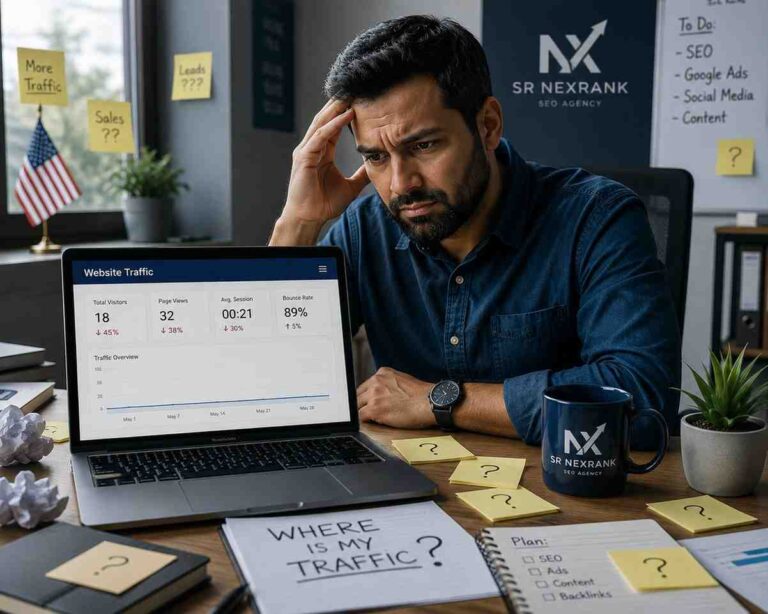
The technology of search engine optimization might be daunting for the small business owner. What is on-page SEO and some specific things you can do to increase your site’s exposure and performance in search engines (including free tools to utilize)? And this video and on page SEO checklist will help you to do just that.
Getting Started With On-Page SEO

On-Page SEO – What is it exactly?
Following this on page SEO checklist consistently will help your website gain better visibility in Google search results.
On-page SEO is the work you do on your website to improve your rankings in search engines. The difference between on page SEO and off page SEO is that on page SEO is something that you can control. Off-page SEO is maximizing external signals such as backlinks to your site. On-page SEO is related to your content and the HTML of a web page. It’s about making your stuff relevant to your target audience, easy to read, and easy for search engines like Google to crawl. A well-optimized page indicates to the search engines that your content is relevant and of high quality for certain search queries.
Benefits of an On-Page SEO Checklist
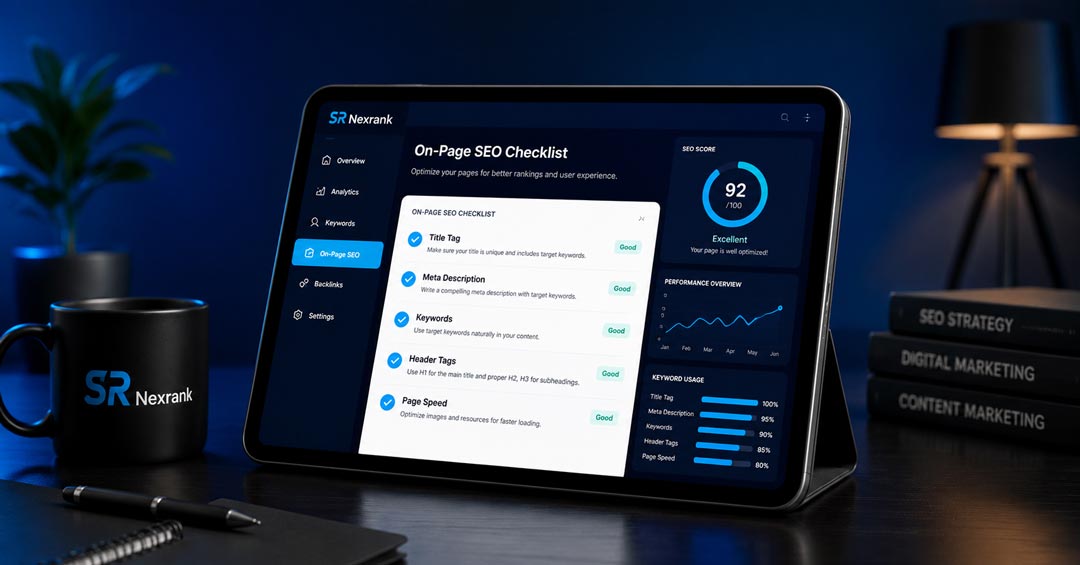
On-page SEO checklist: A helpful tool for small businesses to grow their online footprint. There is no systematic means of achieving it. You can’t ignore the main ranking elements like using keywords to rank better on search engines. Here is an SEO checklist that will enable you to carefully ensure that every page of your website is well optimized. It encompasses things like your title tag, meta description, and quality of your content. Below is an on-page SEO checklist that you can use to promote your website, get more quality visitors, and convert more of those visits into purchasers. So you know where you are in the competitive digital world.
Summary of Best Practice
There are several best practices you’ll want to know to maximize your on-page SEO and fix any technical issues. What it really comes down to is you maximize your target phrase usage in your content, have a clear and straightforward URL structure, and provide high-quality content relevant material that satisfies the user search intent. Other elements like Alt text for images, speed of the site, and mobile optimization are also important. For optimum results, employ a holistic approach by combining technical SEO and content SEO factors so your webpage is ranking high…and also giving a nice user experience, which is an increasingly essential on-page SEO ranking factor.
On Page SEO Checklist: 15 Essential Steps

1. Title Tag Optimization
Title Tag: It is one of the most important on-page SEO elements. It is filled with relevant keywords and makes the first impression on the users on the search engine result pages (SERP). And make your key phrase concise and pertinent to your site’s content. Add it to your site’s title tag. That not only helps search engines to understand what your page is about, but also gives the users a cause to click through, and that is going to substantially boost your on-page performance. Ensure that each title tag is distinctive and engaging to maximize your outcomes.
2. How To Write a Good Meta Description?
Good meta descriptions with relevant keywords and keyword phrases are important for click-throughs in search results, but they are not a direct ranking factor.This short description under the title tag should be adequate to attract the visitors to proceed to your web page. It should naturally blend your desired keyword and be representative of the uniqueness of your content. Think of your on-page SEO as an advertisement for your meta description. This enhances your site’s exposure and drives quality traffic.
3. Header Tags for Structure
Proper usage of header tags (H1, H2, H3, etc.) is highly vital to optimize your content and enhance your site structure. important to categorize your goods so it’s easy for consumers and search engines to digest. Your main core keyword should be in the H1 and tell the user exactly what the page is about. The complex material is broken into smaller pieces with the following H2 and H3 tags. This is helpful for the user experience and notifies search engines what your relevant stuff is and the important elements in it. It boosts your site’s SEO.
4. URL Architecture Best Practices
A good URL structure is easy to read, easy to remember, and related to the content. The page content is easily readable by both users and search engines. I would like to add the word (wanted). Keep it brief. URLs are vital for your on-page SEO; therefore, here are some best practices for URLs. Separate-the-words-with-dashes– It makes things more discoverable in general and improves the user experience.
5. Internal Linking is Crucial.
Internal linking is a useful tool for on-site SEO. It passes “link equity” through keywords and points users to other relative sites. It connects to comparable topics on your own site. This will help readers stay on your site longer, make your site easier to navigate, and assist search engines comprehend how your material links to other information on your site. Search engines can crawl and index more of your pages effectively. As a result, your on-page visibility and search engine rankings improve significantly. If you have broken links, especially.
6. Optimize your image alt tags.
Picture alt text is a written explanation of a photo for the visually handicapped and search engines (which can’t “see” images). Adding descriptive alt text (ideally with some relevant keywords) makes your content more accessible and gives search engines another way to perceive your stuff. Optimizing alt text will help rank your photographs on Google photographs and enhance user experience. This is a win-win for your on-page SEO and your image search results:
7. Speed up page.
Page speed is one of the most important ranking elements because it has an instant effect on user experience and search engine rankings. Make sure you fix any potential technical difficulties. If it’s too slow, you’ll have a high bounce rate, and that will affect your on-page SEO. You may also optimize graphics, use browser cache and minify code to boost your page speed. The quicker your page loads, the happier your users will be and the better quality Google will think it is. This can make the difference between passing or failing your Core Web Vitals.
8. Mobile First Design.
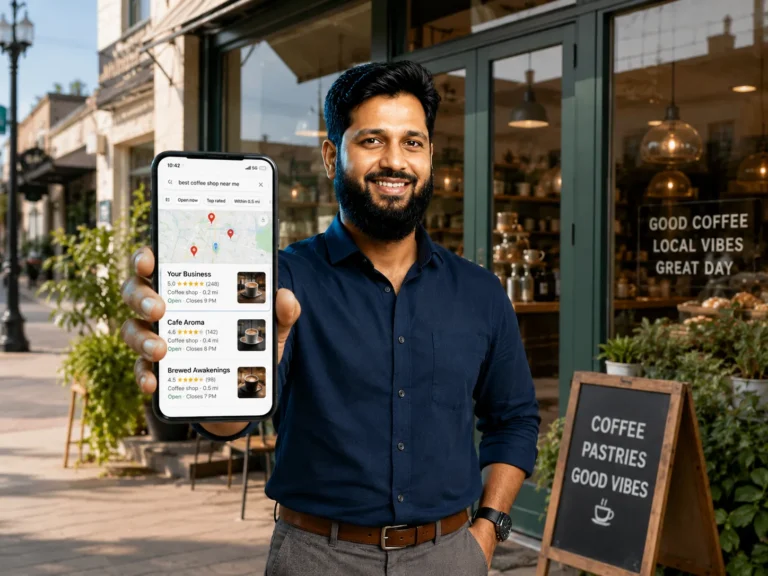
Most of the internet visitors are browsing the webpage on their smartphones. Mobile optimization is a must for strong on-page SEO (it’s not optional anymore).A mobile site offers clients a smooth experience across all platforms. Responsive design means that information responds to the size of the screen. Google indexes on a mobile-first basis. This means a mobile-friendly homepage is a huge ranking element to increase your on-page visibility and overall search engine performance.
9. Understanding the Searcher’s Intent
To create content that ranks and meets your audience’s needs, you need to know what people are searching for. It’s understanding what people are truly seeking when they type a search term into search engines – and that requires superior keyword research. If you provide the consumer what they want, then you are offering the consumer what they want, whether it is answers, things, or a technique to get somewhere. The ability to satisfy search intent can be a game changer for your on-page SEO and your user experience.
10. Preserving Keyword Density
Back then, keyword density was a major concern, but today on-page SEO is about how you naturally introduce your keywords, not how you stuff them in. The goal is to use your target keyword and other related LSI keywords in your content to make it readable and useful to clients. Make content that is relevant to your keywords and use them naturally to boost your page’s SEO. Search engines are clever enough to know context.
11. Take a look at your content quality.
On the page, improve the quality of content and effective employment of keywords to improve relevancy and SEO elements. And the information must be good. This means it should be comprehensive, factual, engaging, original and provide real value for the reader. It aligns perfectly with the user’s search purpose. And your power on the question: Google likes strong content on sites. If you want to improve your on-page search engine position and exposure, then you have to invest in quality and keyword research.
12. Schema Markup (microdata)
Schema markup is a type of microdata that helps search engines better understand the context of your content. This can lead to richer search results (rich snippets) and better optimization for AI search. Adding reviews, product, event, or local business schema to your website will assist your homepage in getting much higher exposure and click through rates. This is an advanced onsite SEO technique that provides the search engines with particular details about keywords and enhances the visibility on the SERP.
13. Technical SEO Elements
Technical SEO involves all of the behind-the-scenes things going on on your website that affect search engine crawlers and indexers and ensuring your pages are Core Web Vitals compliant. This means making it easy for Google to crawl your website, removing duplicate material, having a solid robots.txt file and providing an xml sitemap to Google Search Console. Addressing these technological difficulties makes it easier for search engines to find and understand all the content on your site, further supporting your on-page SEO foundation.
14. Update content frequently
New content tells the search engines that your website is live and that you have something current and relevant to offer. Adding new data, figures or other insights to existing articles can perform wonders for your on-page SEO. This will keep your stuff fresh for the users and will get the search engines to crawl your sites again. You may boost your ranking in search engines by adding content to your webpage.
15. Performance monitoring and evaluation
Finally, one of the most crucial sections of any on-page SEO checklist, routinely watch and examine your website’s performance with Google Analytics and Google Search Console. You may track things like organic traffic, bounce rate, keyword positions, conversion rates to get a sense of where you need to improve. This ongoing monitoring is critical to fine-tune your on-page approaches and preserve your place in the search results.
Frequently Asked Questions FAQs

What does an On-Page SEO Checklist signify?
An on-page SEO checklist is a list of things that need to be done to optimize each web page to increase its search engine rankings. Core Web Vitals and Keywords Included. This usually means optimizing your title tag and meta description to make readers want to click on your link in the search results, using your header tags (H1, H2, H3, etc.) to format your content, and making sure you have an SEO-friendly URL structure. Photo alt text optimization, article quality and search intent, and internal linking tactics are further vital parts of an on-page SEO checklist. Other on-page SEO factors like page speed, mobile-friendliness and schema markup are also vital components of a well-rounded on-site SEO strategy.
How can I speed up my site load?
Page speed is a major ranking element for page SEO and there are several advised strategies that can considerably improve the performance of your site. Simple tactics like image optimization (size and formats), browser cache utilization and minifying CSS, JavaScript and HTML. A solid hosting provider and a content delivery network (CDN) can also help a lot in reducing the loading time of your web page. You can also get rid of render-blocking objects. These optimizations help to improve the user experience by lowering the load time of your unique content.
Why is mobile optimization important for SEO?
Mobile optimization: More and more individuals are accessing the internet through their mobile devices. Good on-page SEO means mobile optimization is a must. Google established a policy of mobile-first indexing. This means that the mobile version of your website will be the one that gets reviewed and indexed. Which is why you need a mobile-friendly website. Mobile-friendly website is one of the most significant ranking factor of your business website. It is mobile responsive and loads quickly on mobile devices for the best experience. Mobile optimization is an important feature of on-page SEO and helps reduce bounce rates and improve search engine rankings. Poor mobile-friendliness might damage your search engine rankings and stop your key content from reaching a larger audience.
Good Content Why Search Engine Optimization is Required
The most crucial on-page SEO element is content quality, which is the foundation of a successful digital marketing approach. It’s good. It’s new. It is related to the user’s question and adds credibility to a topic. By providing material that is relevant and meets the demands of users, you will earn greater search engine rankings and increased visibility for your business website by search engines. As you write amusing, helpful, well-researched content, you’ll organically raise your keyword density, encourage internal linking, and improve overall user experience. That’s an important part of any good on-page SEO checklist.
Building an SEO Friendly URL Structure
SEO-Friendly URLs: Use clear, short and descriptive URLs for your website content. Best practices for URLs: Include your primary goal term in the URL. URLs should be fairly short. * Use hyphens to separate words for readability. “And we’re the only ones who know how to get there.” A logical, hierarchical URL structure will not only help search engines crawl and index your site but will also improve user experience and give a good notion about the content of the web page. This optimization is very important for your overall page SEO and its ranking in the search results.
Conclusion & What’s Next

Summary of On-Page SEO Best Practices
In this article we’ve broken down the most important parts of a thorough on-page SEO checklist and how each best practice may help you get more views and enhance your search engine rating. It takes a lot to optimize your title tag and build appropriate meta descriptions, header tags and decent URL structure.
We’ve talked about the benefits of internal linking for navigating the site for visitors and search engines and improved photo alt text for accessibility and SEO. We also analyzed key technical SEO elements such as site speed and mobile optimization and stressed the need of quality, relevant content that truly satisfies the user’s search intent. If used properly, our on-page SEO checklist can help small businesses improve their on-site SEO and speed up their page load significantly.
This on page SEO checklist is a marathon, not a sprint, of ongoing dedication to digital success.Especially if you want to increase the all-important site crucial. Keep your material fresh and up to date on algorithm updates and keep an eye on your website’s performance in Google Search Console by continuing to do what you’re doing. It’s about providing a fantastic user experience, but also about giving search engines a signal that you’re a worthwhile, authoritative source. Finally, this will also lead to a better site structure. Constantly improve elements of your website from simple H1 tags to complex schema markup and you will be able to build a strong online presence.
Remember, a top search result is a journey, not a destination. Your on page SEO checklist will generate traffic, leads and conversions for years to come. Your company will flourish in the cut-throat economy of the internet.
Contact Us Call To Action srnexrank.com
Want to spice up your website and dominate search results? Creating a comprehensive on-page SEO checklist is challenging and time consuming. But you don’t have to do it alone. We are srnexrank.com digital marketers and we know how to help small companies like yours to reach your online goals with smart corporate website tactics.
Complete the SEO checklist for this page and we’ll run a comprehensive audit of the website to identify what needs to be fixed. Then we will create a specific plan to improve your search engine ranking, attract more targeted visitors to your site and increase your exposure. Don’t let your competitor get ahead of you.
Use AI-powered technologies to improve your internet visibility and execute smarter marketing. Book your free session now! The next step to get your site working for you. srnexrank.com We can help you with these important on-site SEO recommended practices, like optimizing your title tag and meta description, page speed and mobile optimization. We provide solutions that can help your web page stand out in the crowded digital landscape. Come visit us at SRNexRank.com today and see how we can change your online presence and keep your business on top of search results!
Our dedicated team is ready to assist you in implementing these strategies effectively. Let us guide you through the process of enhancing your website’s performance and visibility.
Why Your Website Is Not Ranking: SEO Tips to Rank on Google
Writer Sayabur Rahman